DRAS Assessment Portal for MSMEs
How do you digitize a government evaluation process when your users have never filled a form online and the entire system runs on WhatsApp forwards and printed sheets?
Core Problem
A government MSME evaluation process running entirely on paper, WhatsApp forwards, and inconsistent scoring, with no central system, no audit trail, and no way to scale
Role & Scope
Solo UX & Interface Designer - Workflow mapping, information architecture, wireframes, and high-fidelity screens for both MSME applicants and government evaluators
The Challenge
Users had low digital literacy and no margin for confusion. Every design decision had to work for someone completing a complex multi-step form for the very first time

Project Overview
The DRAS Portal is a digital platform designed to streamline and centralize the MSME design assessment process. It transforms a fragmented, manual workflow into a structured, accessible system, enabling efficient data capture, standardized scoring, and seamless reporting for both MSMEs and evaluators.
Problem Statement
The existing MSME assessment process is being conducted manually and remains time-consuming and fragmented across multiple formats and stakeholders. Key challenges include:
Lack of a centralized system for storing and accessing assessment data
Inconsistent scoring and evaluation methods
High dependency on manual documentation and communication
Difficulty in tracking progress, reports, and historical data
This is leading to inefficiencies, reduced transparency, and increased effort for both MSMEs and assessment officials.
Context
This project is part of an ongoing initiative to digitize the Design Readiness Assessment process for MSMEs. The goal is to build a unified platform that:
Is bringing all assessment-related activities into one place
Is improving accessibility for users with varying levels of digital literacy
Is enabling scalability for handling multiple MSMEs and assessments
Is creating a reliable system for data-driven decision-making and reporting
My Role
I am leading the UX and interface design of the DRAS Portal, focusing on simplifying complex workflows into an intuitive digital experience. My responsibilities include:
Translating manual assessment processes into structured digital flows
Designing user journeys for MSMEs and evaluators
Creating wireframes and high-fidelity UI screens
Defining information architecture for data-heavy inputs and reports
Incorporating usability considerations for low-tech-savvy users (e.g., guided inputs, validation, contextual help)
Collaborating to align design decisions with system and operational requirements
Outcome
The resulting portal reduces manual effort, improves consistency in assessments, and creates a single source of truth for all evaluation data, making the process faster, more transparent, and scalable.
Other projects
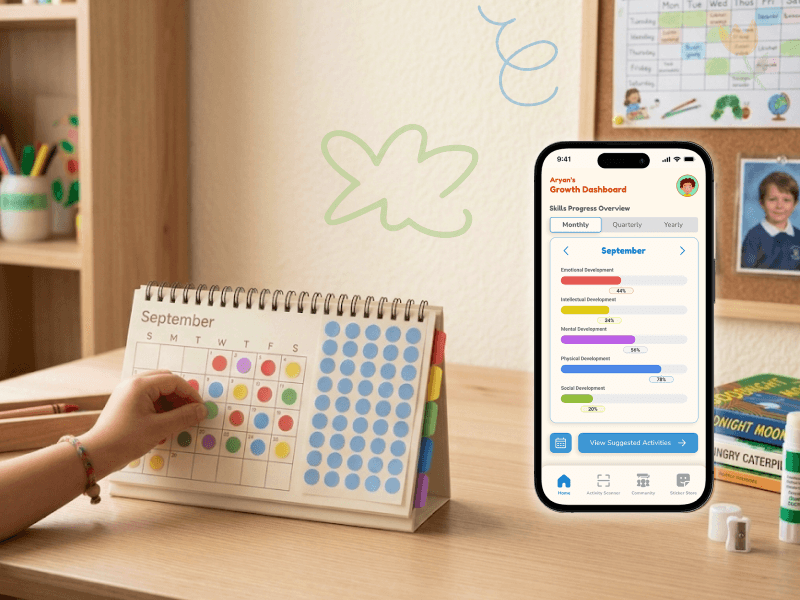
Logsy: Tracking Growth Through Play
Parents want to track their child's development. Children want to play. How do you design one product that genuinely serves both, without turning learning into a chore or play into a test?

A Predictive AI & Automation Ecosystem Design
Hyderabad drivers waste 20+ minutes per trip searching for parking. When you build an AI that predicts availability, the real design problem isn't the algorithm, it's whether users will trust a prediction they can't verify.

Trust and Explainable AI (XAI) in E-Commerce
Indian fashion shoppers abandon carts at high rates even when they like the product. The question wasn't "how do we show recommendations", it was "why don't users trust what the algorithm is showing them, and what would actually change that?"
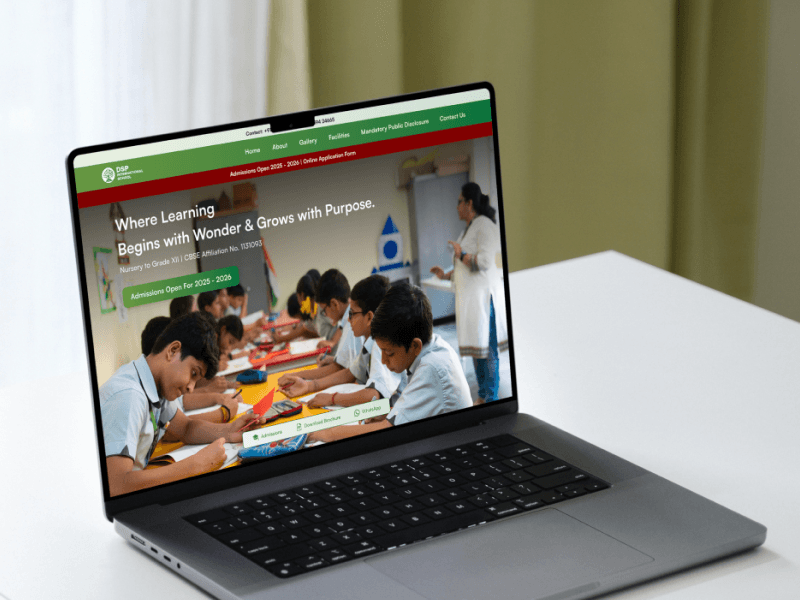
Reimagining a School’s Digital Identity
A school's website is its first handshake with an anxious parent. When navigation is built for internal logic instead of parent intent, the result is a beautiful site that nobody converts on.